When Should You See a Physiotherapist?
Many people wait too long before seeking help for pain or injury. This guide outlines five clear signs it is time to see a physiotherapist, and why pushing through is rarely the answer.

The short answer
Here is the short version: most recurring injuries return because the original recovery stopped at pain relief instead of rebuilding strength, capacity and confidence. When the ache settles, it is tempting to call the job done. But feeling better and being ready to handle your usual load are two very different things, and the gap between them is exactly where re-injury lives.
If you have tweaked the same hamstring, shoulder, back or ankle more than once, you are not clumsy or unlucky. You are almost certainly dealing with an unfinished recovery, a change in how you move, or a demand on your body that your current capacity cannot yet meet. That is a hopeful position to be in. Recurring injuries are usually very treatable once you understand what is actually driving them.
This article explains the common reasons injuries come back, and how a thorough, whole-body physiotherapy approach helps you break the cycle rather than patch it again.
Recurring injuries usually trace back to one or more of the factors below, and rarely to a single structure or a one-off piece of bad luck.
In practice, most recurring injuries involve a mix of these. That is why a single treatment, stretch or exercise rarely fixes the pattern on its own.
No. Pain relief tells you the symptoms have calmed down. It does not tell you the underlying capacity has returned. For anyone whose injury keeps coming back, that distinction matters enormously.
Think of a rolled ankle. Within a couple of weeks the swelling settles and walking feels normal. But the muscles that stabilise the ankle, your balance and position sense, and the tendon’s ability to absorb load may all still sit well below what running, a social netball game at Leichhardt, or an uneven Balmain footpath actually demand. Head back to those activities on a pain-free but under-prepared ankle, and the sprain finds its way home.
The same principle applies to lower back pain, hamstring strains, shoulder pain and tendon problems. Feeling better is the start of recovery, not the finish line. Lasting recovery means restoring strength, control, confidence and the specific capacity your activities ask of you.
Symptoms in one area are often influenced by what is happening somewhere else. A hamstring that keeps straining may be shaped by hip strength, running mechanics, lower back control and overall training load, not just the hamstring itself.
At RedoHealth we see this pattern most weeks. Someone arrives frustrated that the same problem keeps returning despite rest, treatment and a handful of exercises aimed squarely at the painful spot. When we step back and assess the bigger picture, the real drivers are often further up or down the chain, or in how the whole system is loaded across the week. A runner training for the City2Surf, for instance, may have a calf that keeps complaining because the weekly mileage is climbing faster than the tissue can adapt, not because anything is wrong with the calf itself.
This is why we avoid assuming every recurring injury has one simple mechanical cause. The body works as a connected system. Previous injuries, the way you move, your strength in neighbouring regions and your general conditioning all shape how a specific area copes. Understanding those connections is what turns a repeating problem into a solvable one.
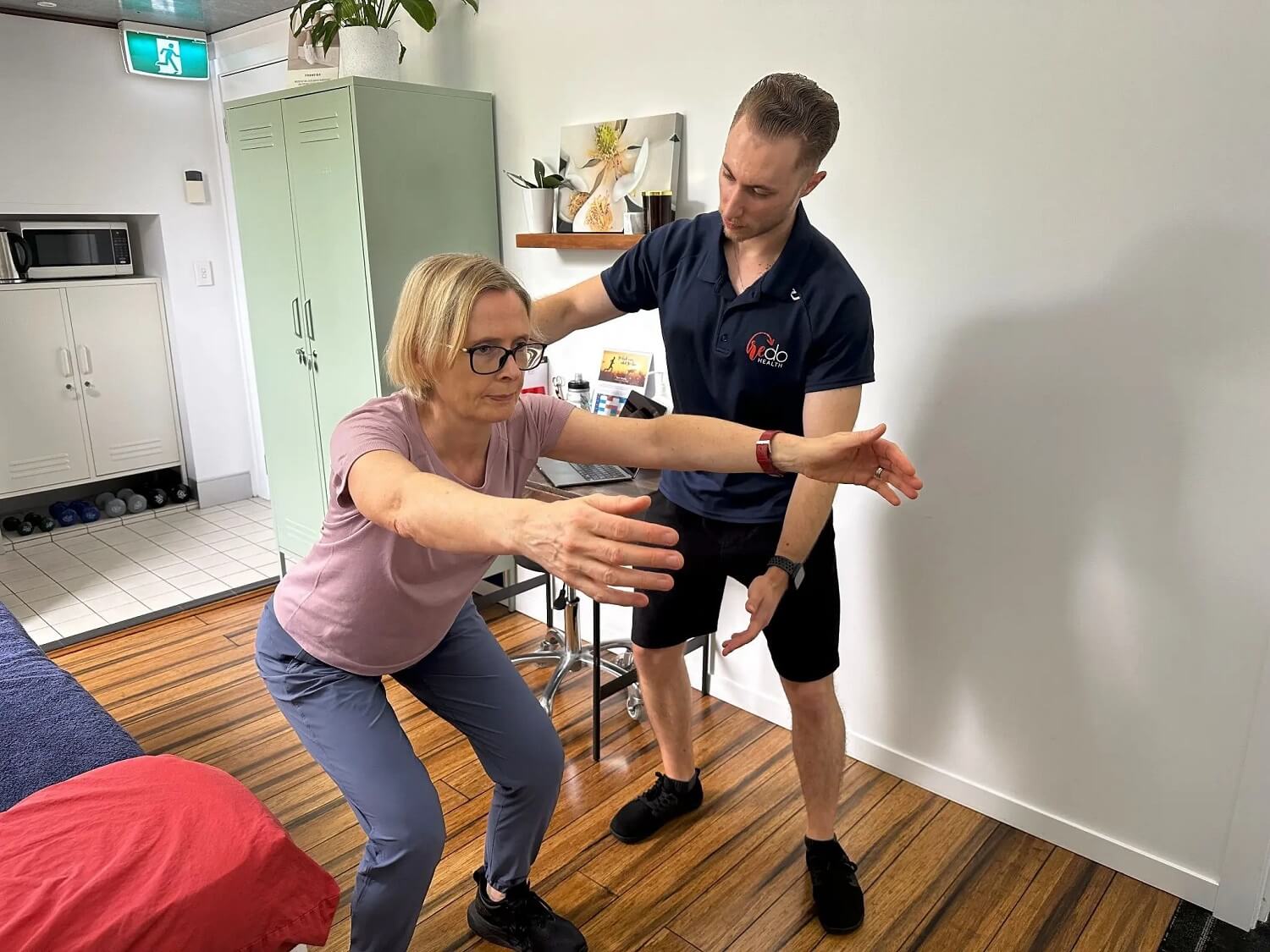
Physiotherapy breaks the cycle by moving past symptom relief to rebuild capacity, unwind unhelpful adaptations and prepare your body for the demands you genuinely want to meet. The aim is not just to settle this episode. It is to make the next one far less likely.
A thorough approach generally works through five stages.
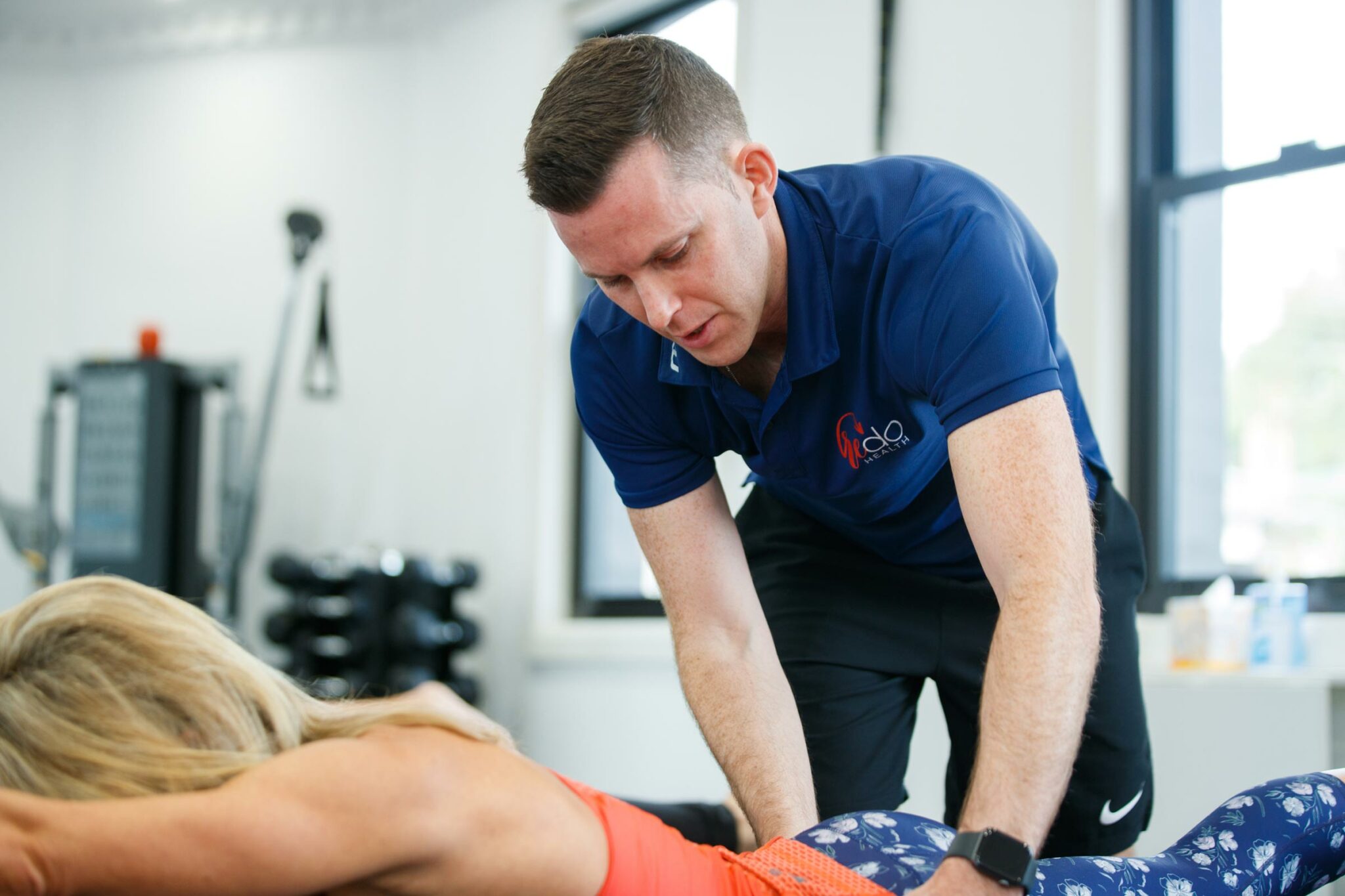
Good rehabilitation starts with a proper assessment. That means looking beyond the painful spot to understand your history, previous injuries, activity levels, goals and how your whole body moves and loads. For recurring injuries in particular, this step often surfaces contributing factors earlier treatments missed. Longer appointment times make it possible, because a genuine assessment cannot be rushed.
Early on, calming pain and irritation helps you move more comfortably. Hands-on treatment, activity modification and clear guidance all have a place here. But this is a bridge, not the destination. The point is to open a window in which meaningful rehabilitation can begin.
This is the stage most often skipped, and the one that matters most for preventing recurrence. Progressive, well-structured strengthening restores the tolerance your tissues need to handle load. Through our exercise physiology and clinical exercise and strength classes, we rebuild that capacity gradually and specifically, so the area that keeps failing becomes genuinely resilient rather than just comfortable.
Recurring injuries tend to leave people cautious, and fair enough. Part of recovery is rebuilding trust in the body through graded exposure to the movements and activities you have been avoiding. Confidence is not a soft extra. It directly shapes how freely and how well you move.
Finally, rehabilitation should bridge the gap to what you actually want to do: running, lifting, playing sport, gardening, or keeping up with the grandkids. That means progressively loading toward those specific demands, so your return is planned rather than hopeful.

It depends on the tissue involved, how long the problem has been around and what you are returning to. Honestly, genuine recovery usually takes longer than symptom relief alone. Tendon problems and long-standing patterns in particular often need several months of progressive loading.
That timeframe can feel discouraging, especially if you have already tried several approaches. It helps to reframe it. The reason the injury keeps returning is often that recovery was measured in weeks of feeling better rather than months of rebuilding capacity. Investing the time once is almost always faster than repeating a shortened recovery several times over.
Recovery is rarely perfectly linear, either. There will be good weeks and harder ones. What matters is the overall direction and a clear plan that progresses as your capacity improves.
If any of these sound familiar, your previous recovery may have stopped short of the finish line.
None of these mean your body is damaged or fragile. They are signals that capacity and confidence need rebuilding, which is exactly what good rehabilitation addresses.
Summary
If the same injury keeps returning, if flare-ups are becoming easier to trigger, or if a problem is stopping you doing the things that matter to you, it is worth getting a thorough assessment rather than waiting for the next episode. Understanding what is actually driving the pattern is the first step toward breaking it.
At RedoHealth in Balmain, we take the time to understand your whole situation, explain what we find in plain language, and build a clear pathway from settling symptoms through to rebuilding strength and returning to full activity with confidence. If you are tired of the same injury coming back, book an assessment with our team and let’s work out what is really going on.
Usually because recovery stopped at pain relief rather than fully rebuilding strength, movement control and capacity. The area can feel fine day to day while still being under-prepared for sport, exercise or heavier loads, which is where re-injury occurs.
No. Pain relief means symptoms have settled, but strength, control and tissue tolerance often lag well behind. Returning to full activity on a pain-free but under-prepared body is a common reason injuries recur.
It moves beyond settling symptoms to rebuild strength and capacity, correct unhelpful movement adaptations, restore confidence and prepare your body for your specific activities, so the area becomes genuinely resilient rather than just comfortable.
It varies with the tissue, how long the problem has been present and your goals, but genuine recovery usually takes longer than symptom relief. Tendon issues and long-standing patterns often need several months of progressive loading.
See a physiotherapist if the same injury has returned more than once, if flare-ups are becoming easier to trigger, or if the problem is stopping you doing activities you value. A thorough assessment helps identify what is really driving the pattern.
This article is general information only and not medical advice. Speak with a qualified practitioner about your individual circumstances.
Many people wait too long before seeking help for pain or injury. This guide outlines five clear signs it is time to see a physiotherapist, and why pushing through is rarely the answer.

Have you heard about the mystical Chinese art of Qigong? If you have, I still believe that Qigong may remain something of a mystery to

Have you heard about the mystical Chinese art of Qigong? If you have, I still believe that Qigong may remain something of a mystery to