The short answer
Physio for rehabilitation and strength means your physiotherapist guides you from the early days of an injury through to having enough strength and capacity to get back to what you love. A good program usually moves through several broad phases: understanding the problem, settling symptoms and restoring movement, progressively rebuilding strength, returning to sport, work or daily life, then maintaining that capacity long term.
Here’s our view. Pain relief is an important start, but it’s rarely the whole story. Rehabilitation works best when it also rebuilds strength, confidence and physical capacity, so you’re better prepared for the demands of everyday life. That later phase is the one people most often skip. At RedoHealth in Balmain, we guide you through every stage, not just the first few sessions.
It’s a familiar story. A sore knee settles after a handful of appointments. Life gets busy and the exercises drift. A few months later, the same knee flares on the same hill. Nothing was “wrong” with the first round of treatment. It’s just that a little more rehabilitation might have made the difference.
What is a physio-led strength program?
It’s a structured, progressive exercise plan that a physiotherapist designs and supervises. It’s built on a thorough assessment of your injury, your body and your goals. It starts where you are now and builds capacity over time, so your body can handle what your everyday life asks of it.
It differs from a generic gym program in a few ways that matter:
- It starts with understanding the problem. Your physio looks at what is driving your symptoms, including movement, strength, previous injuries, workload, sleep and stress, rather than treating one sore spot in isolation.
- It is individualised. Exercises, loads and progressions are matched to your tissue healing, your symptoms and what you need to get back to.
- It progresses deliberately. Load goes up gradually, guided by how your body responds, so you build strength without unnecessary setbacks.
- It has an end goal. Less pain is part of it. The bigger aim is the strength, confidence and capacity to do the things that matter to you.
At RedoHealth, we use our own five-stage pathway:
- Recognise: Understand the problem, identify relevant contributing factors and set meaningful goals.
- Recover: Settle symptoms, restore movement and begin appropriate rehabilitation.
- Rebuild: Progressively develop strength, movement control and physical capacity.
- Return: Prepare for and return to meaningful activities, work, exercise or sport.
- Resilience: Maintain physical capacity, confidence and long-term exercise habits.
Everyone moves through these stages at their own pace, and the later stages are where much of the lasting change happens.
What does a physio-led strength program involve?
While every program is individual, here’s what you can generally expect:
- An initial assessment of your symptoms, movement, strength, physical capacity and goals.
- Individualised exercise prescription based on what you can currently do.
- Progressive strengthening, with exercises and loads adjusted as your capacity improves.
- Regular reassessment of your symptoms, function, strength and progress towards your goals.
- A transition towards independence, whether that’s your own training, gym-based exercise or our supervised clinical exercise classes.
Our Restore, Rebuild and Refine clinical exercise classes
One of the ways we support people beyond individual appointments isthrough our three levels of physiotherapy-led clinical exercise classes:
Restore:
Focuses on restoring movement, developing foundational strength, improving movement control and building confidence with exercise.
Rebuild:
Progresses strength, stability, coordination and physical capacity through increasingly challenging exercises.
Refine:
Builds on established strength and movement capacity, with more complex exercises and greater physical demands to support ongoing progression.
These aren’t rigid stages that everyone must complete in order. The right class for you depends on your assessment, goals and current capacity.
Every class is led by a physiotherapist and kept to small groups, so exercises can be individually modified and progressed. It’s a way to keep building strength with expert guidance while developing more independence and confidence in your own exercise.
Should I see a physio, exercise physiologist or personal trainer after an injury?
It depends on your needs, goals and stage of recovery. Physiotherapists have specific expertise in assessing and rehabilitating injuries. Exercise physiologists specialise in exercise prescription for injury, chronic conditions and long-term health, and play an important role in our team at RedoHealth. Personal trainers can be a valuable part of ongoing fitness and strength development.
These roles complement each other. Many people start with physiotherapy to understand and manage their injury, then progress to exercise physiology, clinical exercise classes or independent training as their capacity grows. Before someone moves on to more independent training, we like them to be able to answer yes to three questions:
- Do I understand what caused the problem and what I’m building towards?
- Can I do my key exercises at a meaningful load without a flare the next day?
- Do I know which signs mean “keep going” and which mean “ease off”?
If any answer is no, there’s still a gap worth closing.
When can I start strength training after an injury?
Often much earlier than people expect. Depending on the injury, some form of strength work can begin within the first days or weeks.
Early rehabilitation looks different depending on the injury. It might include isometric exercises, where you tighten a muscle and hold it without moving the joint. It might also include other forms of resistance exercise with modified loading, or strengthening the areas around the injury while it settles.
Timing depends on things like:
- The type and severity of injury
- Whether you have had surgery, and your surgeon’s guidelines
- How symptoms respond to movement and load
- Your general fitness and health before the injury
For many musculoskeletal injuries, a period of relative rest followed by a gradual return to movement tends to work better than complete rest. Your body generally adapts to the demands placed on it, so carefully chosen exercise is often an important part of recovery. Your physio’s job is to find the right dose: enough to prompt adaptation, not so much that it stirs things up.
How long does injury rehabilitation take?
Commonly anywhere from a few weeks to several months, sometimes longer. It depends on the tissue involved, how significant the injury is and what you want to return to. Pain, strength and function don’t always improve at the same rate. Some people regain function while still having symptoms, while others feel better before their physical capacity has fully recovered. That’s why rehabilitation is guided by more than pain levels alone.
As a rough guide:
- Muscle injuries can vary from minor strains that settle fairly quickly to more significant tears that take longer.
- Tendon problems often respond gradually, so patience and consistency are usually important.
- Ligament injuries and rehab after surgery can take longer, especially when the goal is returning to sport.
- Persistent or recurring pain differs greatly from person to person.
Your goal shapes the timeline too. Walking comfortably to the local shops is a different target from getting back to your usual running route at your old pace. A clear plan with milestones helps you see progress, even on the weeks when it feels slow.
Why do injuries keep coming back after physio?
Injuries can recur for several reasons, including returning to activity before sufficient strength and capacity have been restored, sudden increases in training or workload, previous injury and other individual factors. Although pain may settle, this doesn’t always mean someone has regained the physical capacity needed for their usual activities.
Some common contributors:
- Stopping before capacity is restored. Symptoms may improve before the tissue and surrounding muscles have rebuilt their tolerance to load.
- Treating the sore spot only. Pain in one area can sometimes involve other factors, such as strength elsewhere in the body, how much you’re doing or past injuries. A thorough assessment looks at the bigger picture.
- Jumping back in too fast. Returning to full activity without a graded progression.
- Low confidence. Worry about movement can lead to guarding or avoidance, which can reduce strength over time.
Everyday life adds its own demands. Hills, stairs, carrying shopping or lifting a child all put extra load on your legs and back. Rehab that only gets you comfortable on flat ground can leave a gap.
That’s why we put so much weight on the later stages. Building your strength and capacity can help your body better manage the physical demands of daily life, work and sport.
Is strength training safe with chronic pain?
For many people with chronic or persistent pain, carefully guided strength training can be a helpful part of their care. Persistent pain can be complex, and factors such as sleep, stress, confidence and general activity may all play a part. Gradual, well-guided exercise can help people build strength, function and confidence, even when pain has been around for a long time.
A few principles we lean on:
- Start where you are. The first load should feel manageable, not heroic.
- Some discomfort can be acceptable.An increase in pain during exercise doesn’t automatically mean tissue damage or harm. Research suggests that exercising with some pain can be acceptable, and may help in the short term, for chronic musculoskeletal pain.
- Progress gradually. Small, consistent steps tend to work better than big jumps.
- Focus on what you can do. Gaining capacity and confidence often matters as much as pain levels.
Exercise is individualised, progressed appropriately and guided by both your symptoms and your functional improvements.
If you’ve already tried several approaches without getting a clear explanation, that can be frustrating. That’s why we put time into a thorough assessment, joining the dots between your history, your movement and what’s been tried before.
How many physio sessions do I need for rehab?
It depends on your injury, your goals and how much you do between appointments. Some people need only a few sessions plus a home program. Others do better with regular support over several months, especially with persistent pain or a return to sport.
Appointments are often closer together early on, then spread out as you become more independent. Much of the real progress happens between sessions, so it helps to know how to get the most out of your physiotherapy home exercise program. We aim to give each visit enough time to cover assessment, treatment, education and exercise progression properly.
Do I need a referral to see a physio in Balmain?
Generally, no. You can book directly with RedoHealth in Balmain.
If you have private health insurance, check with your fund about what your policy covers.
Key takeaways
- A physio-led strength program takes you from settling symptoms through to rebuilding strength and returning to meaningful activity.
- Strengthening can often begin earlier than people expect, guided by your physio.
- Recovery times vary, and pain, strength and function don’t always improve at the same rate.
- Carefully guided strength training can be a helpful part of managing persistent pain.
- RedoHealth’s Restore, Rebuild and Refine classes offer physio-led, small-group support at different levels of capacity.
You don’t need a referral to see a physio in Australia.
Frequently asked questions about physio for rehabilitation and strength
Can I do my rehab exercises at home, or do I need a gym?
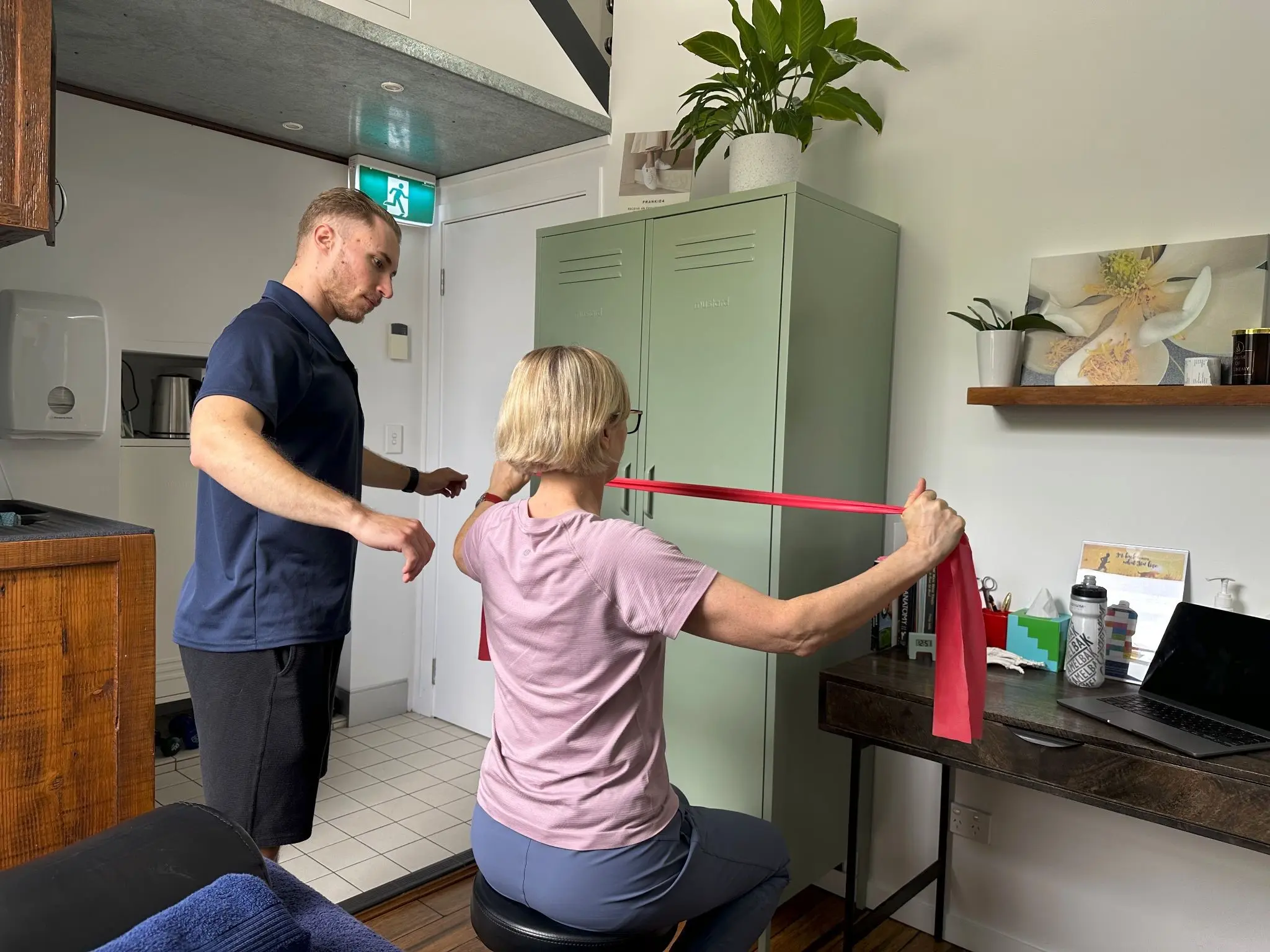
Home works well for most people, and home exercises are a core part of recovery. We design the program around your space, equipment and schedule. Often that’s just a step, a resistance band and a backpack you can load up with books or water bottles. We then progress it at each review so it keeps challenging you.
I’m in my sixties with osteoporosis. Is strength training still worthwhile?
In many cases, yes. Strength training can be beneficial at any age, helping with muscle strength, balance and independence. If you have osteoporosis or osteoarthritis, your physio can tailor exercises to suit your condition and progress them safely, so you can build confidence and function over time.
I had a baby last year and want to get back to running. Where do I start?
A physiotherapy assessment is a sensible first step. Your physio can check how your body is handling load, including pelvic floor function where relevant, and build a graded plan back to running rather than guessing at the right time.
What happens when I finish rehab? Do I just stop?
That might mean independent training, our Restore, Rebuild or Refine clinical exercise classes, or periodic check-ins with your physio, so you keep building on the strength you’ve worked hard to regain.
If pain or a recurring injury is stopping you from doing what matters to you, a thorough assessment is a good place to start. Book an appointment with RedoHealth to understand what’s driving your problem and build a clear plan from recovery to long-term strength.
This article is general information only and not medical advice. Speak with a qualified practitioner about your individual circumstances.